
We are proud to offer a minimally invasive, incision-free technique (also known as flapless surgery) for all of our dental implants. This advanced method combines CBCT-guided precision with the skill and artistry of hands-on surgical care. The result? Fewer complications, faster healing, and highly accurate, long-lasting results.
Benefits for You as a Patient:
1. Less Trauma, Faster Recovery, Greater Comfort, Less Pain
- No incision means no sutures, minimal bleeding, reduced swelling, and fewer complications.
- Most patients are back to normal activities within 24 hours.
- Avoiding incisions reduces the release of pain-inducing chemicals in the body. Our patients consistently report less post-op discomfort, with many needing no pain medication at all..
2. More Reliable and Longer Lasting Results
- Our implant-crown increases overall reliability by at least 100%..
- They feature a larger surface area and compact design, helping preserve bone and reduce long-term loss.
- Designed with a superior biological seal, they block bacteria more effectively—dramatically lowering the risk of peri-implantitis, the leading cause of implant failure.
A Smarter, Safer, and More Comfortable Way to Restore Your Smile
Our incision-free implant technique at Axia Implant Dental Clinic represents the best of modern dental technology—precise, adaptive, comfortable, and efficient. If you’re ready for a better implant experience, we’re here to help.
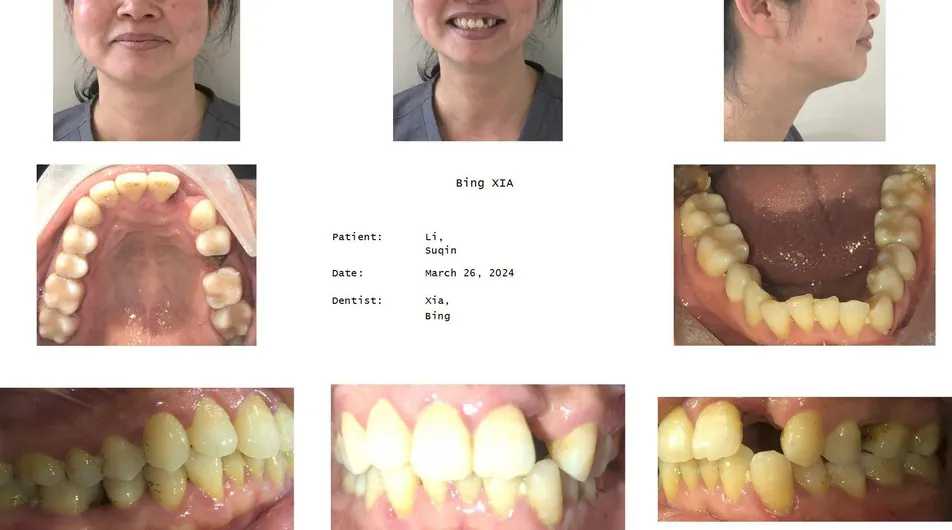
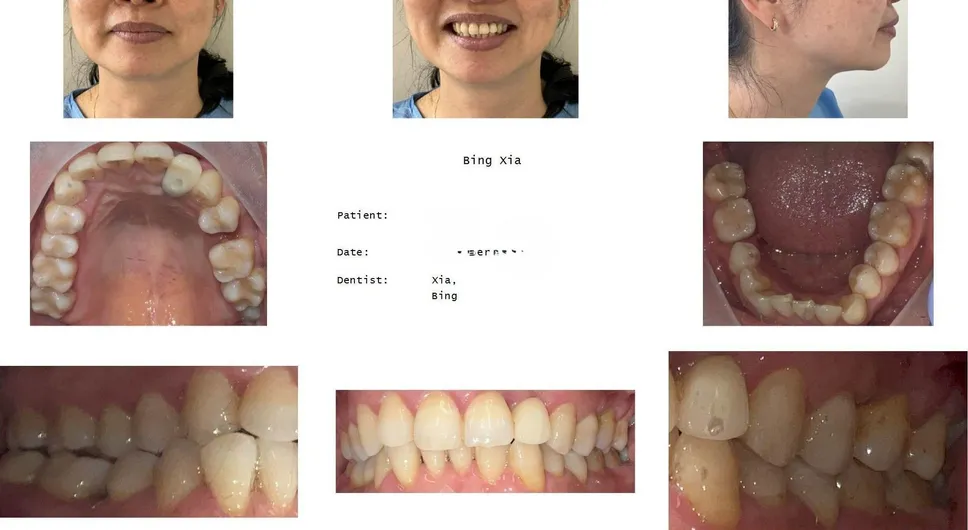
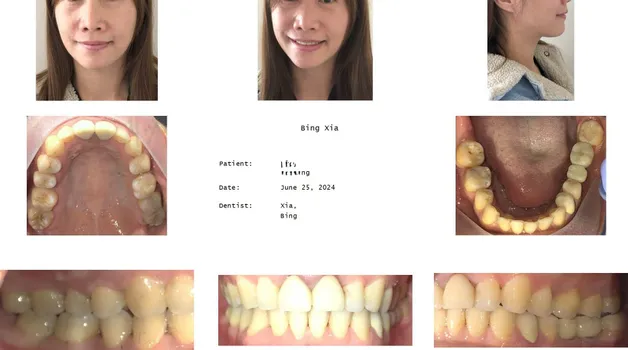
The following patient missed one of her upper left front teeth. Many of her friends can't tell which one is the implant we did for her.
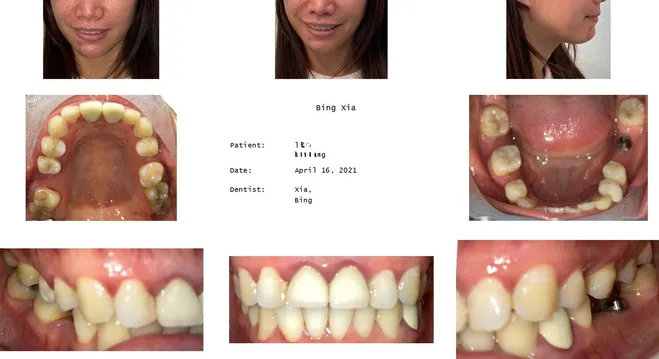
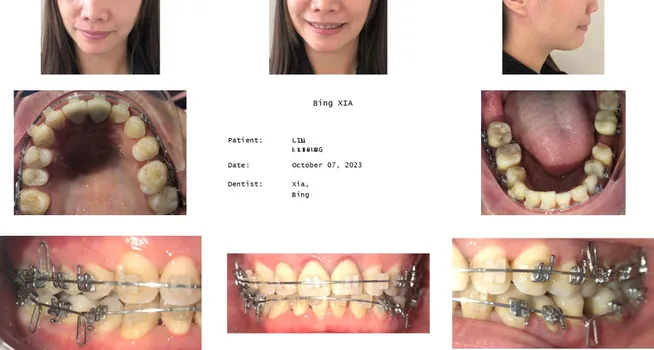
The following patient had 6 missing teeth. We used orthodontic treatment close the 4 of them so she only ended up having 2 implants done and greatly saved her money. She continued to work in the afternoon after she got her implant with us in the morning. --- Get the implant only, not the cut!
Why We Practice All-on-C of Full-Arch Dentistry: The Standard That Fixed Dentistry Should Have Always Been
You may have heard of "All-on-4" or "All-on-X." These protocols have helped many patients, and we respect the clinicians who practice them. But we believe it is time for an honest conversation about what fixed dental prosthetics should actually mean.
A Fundamental Question About Standards
If your "permanent" bridge requires screw tightening or screw replacement every six to twelve months — is it truly a fixed restoration? In any other field of medicine or engineering, a structural component that routinely loosens under normal functional load would not be considered a success. It would be considered a design flaw.
We believe the dental profession deserves better. More importantly, you deserve better.
Why Tilting Is an Avoidance Strategy
The defining feature of All-on-4 and similar protocols is the tilting of posterior implants — angled up to 45 degrees — to work around anatomical boundaries like the sinus cavity or the inferior alveolar nerve. This is an elegant engineering workaround, and we acknowledge the clinical thinking behind it. But a workaround is exactly what it is.
When an implant is tilted, chewing forces no longer travel straight down its long axis. Instead, they arrive at an angle, generating a bending moment at the bone-implant interface and, critically, at the abutment-screw connection. This off-axis mechanical stress is the primary reason tilted systems require such frequent maintenance. The screw is not failing randomly — it is responding predictably to forces it was never ideally designed to handle.
The All-on-C Difference: Biological Logic, Not Mechanical Compromise
All-on-C — All-on-Crestal — is built on a different philosophy entirely. Rather than tilting implants to avoid difficult anatomy, we invest in the minimally invasive surgical skill to restore the conditions that allow straight, vertical implant placement:
Crestal sinus elevation where needed, rather than routing around the sinus
Ridge expansion to maximize crestal bone engagement
Deep-threaded, high-engagement fixtures that achieve strong primary stability in crestal bone without requiring angulation
Every implant is placed straight and vertical. Chewing forces travel axially — directly down the long axis of the implant, exactly as nature intended with your natural teeth. This is not a small distinction. It is the biomechanical difference between a restoration that works with your biology and one that compensates around it.
The Prosthetic Superiority Is Not Subtle
When all implants are parallel and vertically aligned, everything downstream becomes more precise, more durable, and more elegant:
Your bridge seats passively and exactly. Parallel implants allow milled frameworks to fit with a level of precision that tilted, multi-unit abutment systems simply cannot match. There is no torque correction, no angular compensation built into the connection.
The screw interface is not under chronic stress. Without bending moments driving constant micromotion at the abutment junction, screws stay where they belong — tightened once, at delivery.
Digital fabrication reaches its true potential. All-on-C is the natural partner of modern CAD/CAM dentistry. Parallel implant axes mean your digital scan, your milling file, and your final zirconia bridge all speak the same language. The precision of the technology is not undermined by compensating for angular mismatches.What "Fixed" Should Actually Mean
A truly fixed restoration should be placed, confirmed, and then largely forgotten — by you. It should not require a calendar reminder to visit us for screw maintenance. It should not generate the anxiety of wondering whether something will loosen before your next check-up.
With All-on-C, once your final smile is delivered, our goal is simple: you should stop thinking about your teeth and start living your life.
That is what fixed dentistry has always promised. We are committed to being one of the practices that actually delivers it.
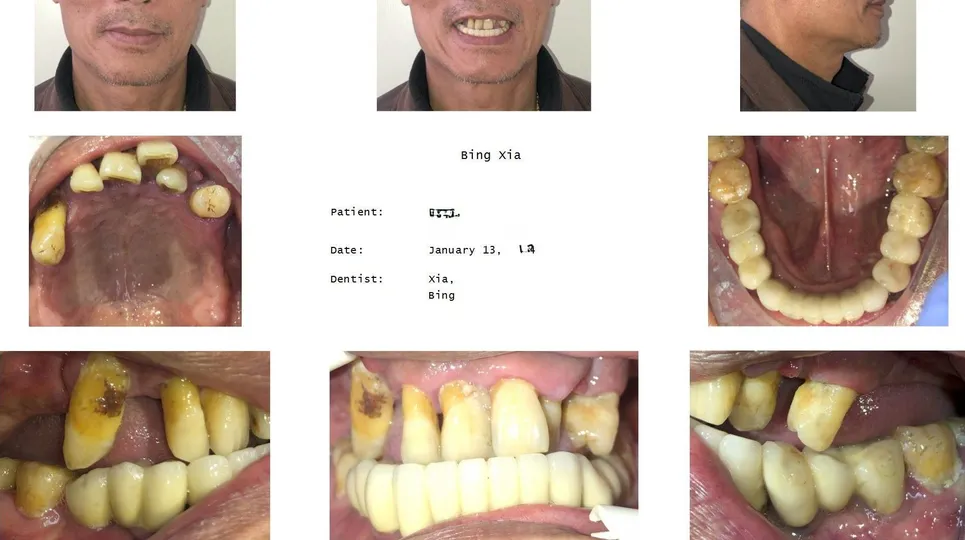
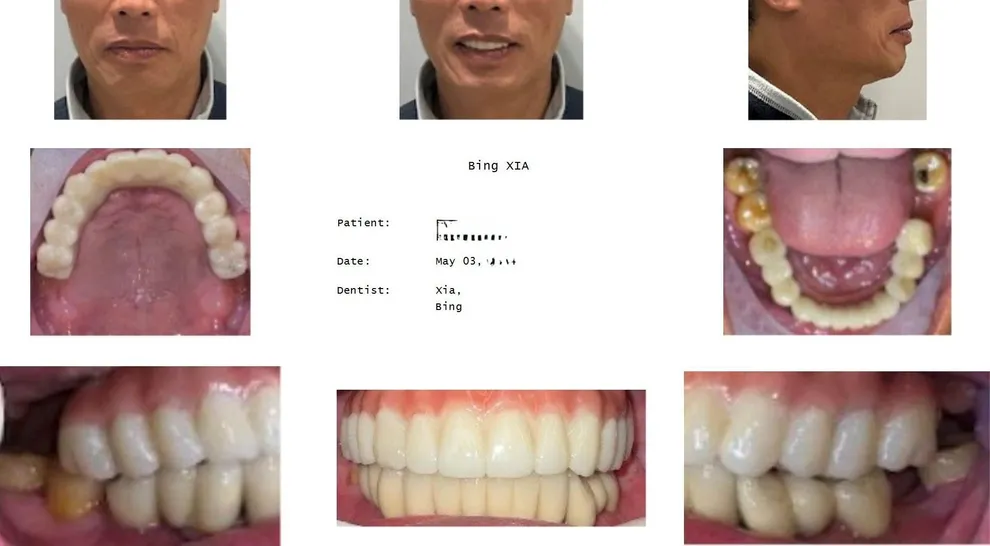
The following patient had upper and lower full mouth implant denture done with us. He did not take any pain pills after the implant surgery.
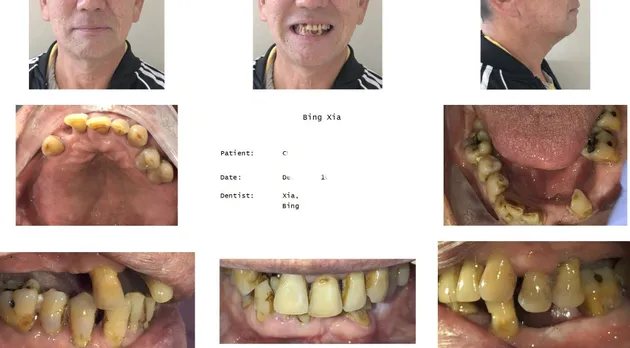
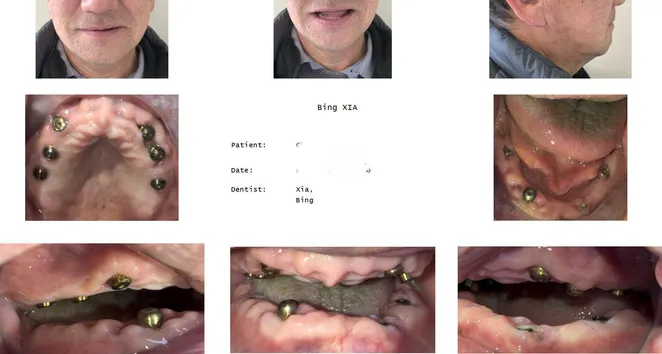
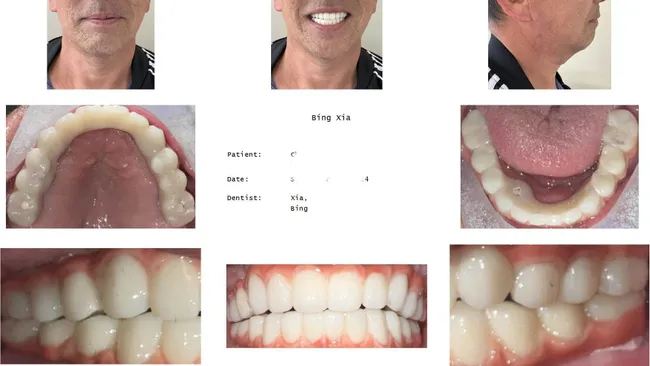
Full Mouth Implant Orthodontics? We corrected his crossbite after we did the full mouth implant denture for the following patient.
📅 Ready to Take the Next Step?
Schedule a complimentary consultation today and find out if you're a candidate for our advanced, minimally invasive dental implants.
植牙不挨刀,湾区哪里找
在Axia Implant Dental Clinic,我們自豪地提供一種微創、無切口的植牙技術(也稱為無翻瓣手術)。 這項先進的療法結合了CBCT導引的精準度與醫師親手操作的技術與美學,帶來更少的併發症、更快的癒合速度,以及高精度、持久的植牙效果。
對您而言的好處:
1. 創傷小,恢復快 無需切開牙齦,無縫線、出血量少、腫脹減輕,併發症少。 大多數病人在24小時內即可恢復日常活動。
2. 避免切口可減少體內產生引發疼痛的化學物質。 我們的許多病人術後甚至不需要任何止痛藥。
3. 簡單、精準又安全: 我們使用CBCT影像導引,只需單一鑽孔步驟即可完成植體置入。 此技術可達到亞毫米等級的精準度,精細地掌握骨密度、神經路徑與解剖結構。 不同於需多步驟導板的系統(步骤越多,誤差越大,骨浪费越大),我們的簡化流程可降低猜測與風險。
4. 手術中即時調整的彈性: 若您的解剖構造有突發挑戰(如骨密度不均或神經距離過近),我們可立即現場調整。 而其他系統,特別是機器人或全引導技術,通常缺乏這種彈性,導致延誤或需重新安排手術。
5. 我們的技術省去了昂貴的手術導板、機器輔助或冗長的規劃過程。 所需骨量也較少,通常能避免加骨粉手術,為您節省時間、金錢與不適。
6. 更可靠、更持久的結果: 我們的植體有特別設計的生物封閉結構,有效阻擋細菌入侵,顯著降低种植體周圍炎(植牙失敗主因)的发生。
一種更聰明、更安全、更舒適的微創植牙選擇
Axia Implant Dental Clinic的無切口植牙技術,展現了現代牙科科技的極致成果——精準、靈活、舒適且高效。 如果您準備好迎接更好的植牙體驗,我們隨時準備為您服務。
📅 準備好踏出下一步了嗎?
立即預約免費諮詢,了解您是否適合我們這項先進、微創的植牙技術!